What is in this article?:
- SN Whole Health: Winter 2012 Trends
- Dinnertime Helpers
“People may not be vegan or vegetarian, they’re just looking to eat healthier. Cheese is not the healthiest food.”
— Jamie Schapiro, director of marketing, Galaxy Nutritional Foods
Dairy-free Boom
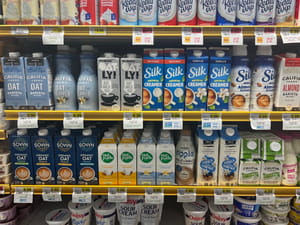
The growing demands of special-needs shoppers are helping categories once considered niche get much-needed upgrades. One of the hottest segments is cheese alternatives.
Sales of analogs free of lactose or casein, or completely dairy-free, are up in most cheese-related categories, particularly shreds. Aside from vegans, vegetarians and those with food allergies, sales are getting an additional bump from anyone looking to improve their diets by cutting back on saturated fat.
“People may not be vegan or vegetarian, they’re just looking to eat healthier,” said Jamie Schapiro, director of marketing for Galaxy Nutritional Foods, makers of the recently re-branded GO Veggie! line of lactose-free and dairy-free products. “Cheese is not the healthiest food.”
Consumers have become more open to trying new products, manufacturers say. They’ve embraced fluid dairy alternatives like almond milk, and are snacking on hummus, a product many of them never even heard of until recently.
“That is a product that went from $5 million in sales 16 years ago to $400 million today,” noted Alex Paiuk, president of Nutty Cow, a year-old manufacturer of cashew-based cheese analog spreads. “People are looking for healthy alternatives that are compatible with their diets and are highly versatile.”
As the category grows, retailers will need to determine whether it’s time to move analogs out of the produce department, where most of them are currently merchandised alongside vegetarian products, and into the actual dairy case.
Make Mine a Vinegar
Americans most often associate the pungent tang of vinegar with their favorite salad dressing. The last place consumers would expect to find the fermented fruit juice is in a ready-to-drink health beverage — but that’s exactly where it’s showing up.
“Vinegars present us with a clean flavor, a popping sensation,” said Kazia Jankowski, associate culinary director at the Sterling-Rice Group, a Boulder, Colo.-based food marketing firm. “The experience is much lighter and brighter than the one we get from our meat-and-potato diet.”
Several companies are currently pushing all-natural or organic juice beverages with a shot of apple cider vinegar. Bragg Live Food Products has already pioneered the emerging category when it came out with a line of RTD cider drinks in 2010. Each one of the six certified organic varieties contains two tablespoons of apple cider vinegar per 16-ounce serving. They’re a better-for-you option than the traditional soft drinks that appeal to most Americans, according to Dr. John Westerdahl, Bragg’s nutrition expert.
“Most of your ready-to-drink beverages are junk stuff. They have artificial flavors, artificial colors and other things that don’t contribute to your health,” he said. “You have to be just as careful in the wellness category because many of those drinks have a fair amount of sugar in them.”
Research has shown vinegar promotes digestive health by aiding the body’s absorption of essential nutrients. Vinegar is also known to have antiglycemic properties that help maintain blood sugar levels, an issue of concern for diabetics.
“Hippocrates used vinegar for his patients, and it’s forever been known as a home remedy for a number of ailments,” noted Westerdahl.
Sales of the RTD vinegar drinks have been largely confined to the natural food channel, but demand is poised extend to mainstream venues as more manufacturers roll out products. PokPok, a trendy New York restaurant, has started selling so-called “drinking vinegars” online. South Korea’s Daesang America is introducing Vinki, an apple cider-based drink in two flavors, pomegranate and blueberry.
“Vinki quenches more than your thirst,” reads the company’s promotional materials.
SN Whole Health: Winter 2012 News
Vinegar beverages have a long history in Asia. Kombucha, the fermented tea libation that’s become popular in the United States, was invented in China. Sales hit a snag recently when products were pulled from store shelves after it was discovered that fermentation created alcohol as part of the process. The new cider drinks won’t ferment to that point and are shelf-stable.
Overall vinegar sales are up in the past year, according to SymphonyIRI. The category grew more than 5% to reach $293 million in the food/drug/mass channel (excluding Wal-Mart). Such numbers bode well for the sale of vinegar beverages, though marketers admit American taste buds may require some conditioning.
“It’s a sensation that’s a surprise to American palettes,” said Jankowski.